<div class="article-toc" style="background:#f8f9fa;border:1px solid #e2e8f0;border-radius:8px;padding:20px;margin-bottom:30px;"><h4 style="margin-top:0;margin-bottom:12px;font-size:18px;color:#1a202c;">Table of Contents</h4><ul style="margin:0;padding-left:20px;list-style-type:disc;"><li><a href="#defining-the-cabinetry-tiers" style="color:#2b6cb0;text-decoration:none;">Defining the Cabinetry Spectrum: Stock, Semi-Custom & Bespoke Millwork</a></li><li><a href="#tolerances-and-prewar-realities" style="color:#2b6cb0;text-decoration:none;">The NYC Reality: Defeating Out-of-Plumb Walls Without Fillers</a></li><li><a href="#material-grades-and-awi-standards" style="color:#2b6cb0;text-decoration:none;">Materiality and Construction: Plywood Cores, Solid Hardwoods & Veneers</a></li><li><a href="#integrated-appliances-and-hardware" style="color:#2b6cb0;text-decoration:none;">Seamless Appliance Integration & Concealed German Hardware</a></li><li><a href="#comparative-roi-analysis" style="color:#2b6cb0;text-decoration:none;">Cost Breakdown, Lead Times & Appraisal ROI</a></li><li><a href="#frequently-asked-questions" style="color:#2b6cb0;text-decoration:none;">Frequently Asked Questions</a></li></ul></div>
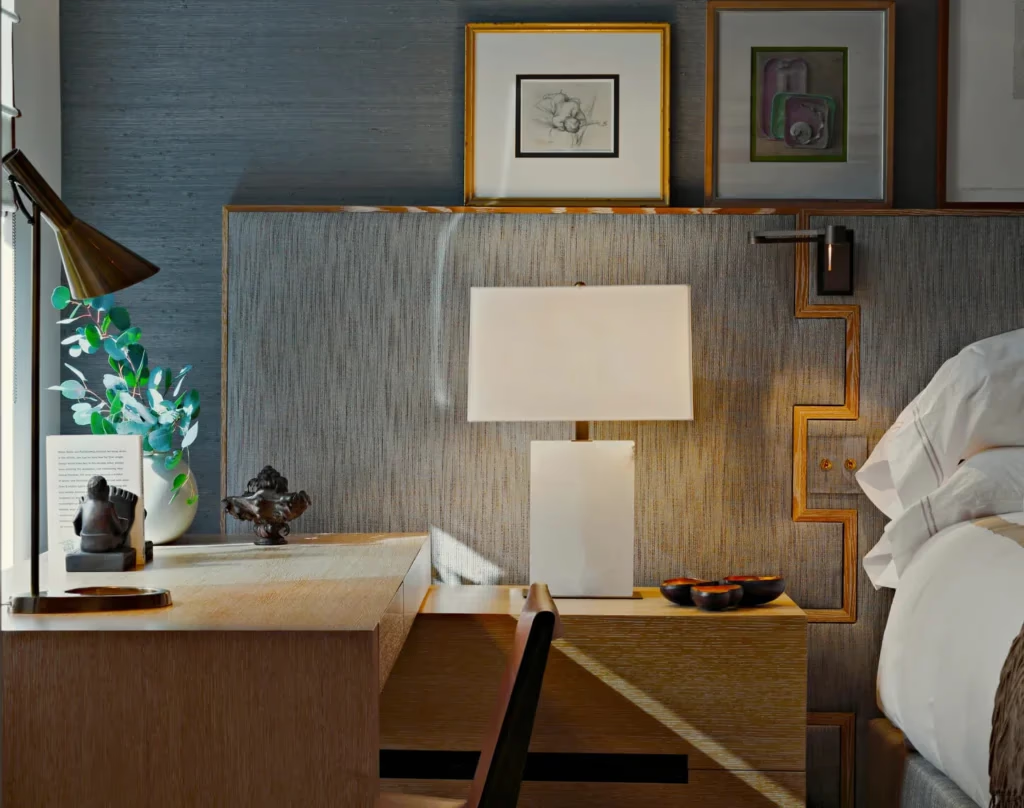
<p class="wp-block-paragraph">When embarking on a high-end apartment or townhouse remodel in New York City, few decisions exert greater influence on visual sophistication, storage ergonomics, and long-term resale appraisal than cabinetry. For discerning homeowners, the debate consistently centers on two premium categories: high-end semi-custom cabinetry versus bespoke architectural millwork crafted in dedicated fabrication shops. While semi-custom products promise established factory timelines and catalog consistency, bespoke <a href="https://ksrenovationgroup.com/custom-millwork/">architectural custom millwork</a> offers uncompromising millimeter precision, grain-matched luxury veneers, and complete spatial integration that modular manufacturing simply cannot replicate.</p>
<h2 id="defining-the-cabinetry-tiers" class="wp-block-heading">Defining the Cabinetry Spectrum: Stock, Semi-Custom & Bespoke Millwork</h2>
<p class="wp-block-paragraph">To assess the true return on investment (ROI), homeowners must first understand how fabrication methodologies diverge across the three primary casework tiers:</p>
<ul class="wp-block-list">
<li><strong>Stock & Modular Cabinetry:</strong> Mass-produced overseas or in regional automated factories in fixed 3-inch dimensional increments (e.g., 24", 27", 30", 36"). Boxes are constructed from particleboard or standard MDF with limited door style choices and zero adaptability to irregular site conditions.</li>
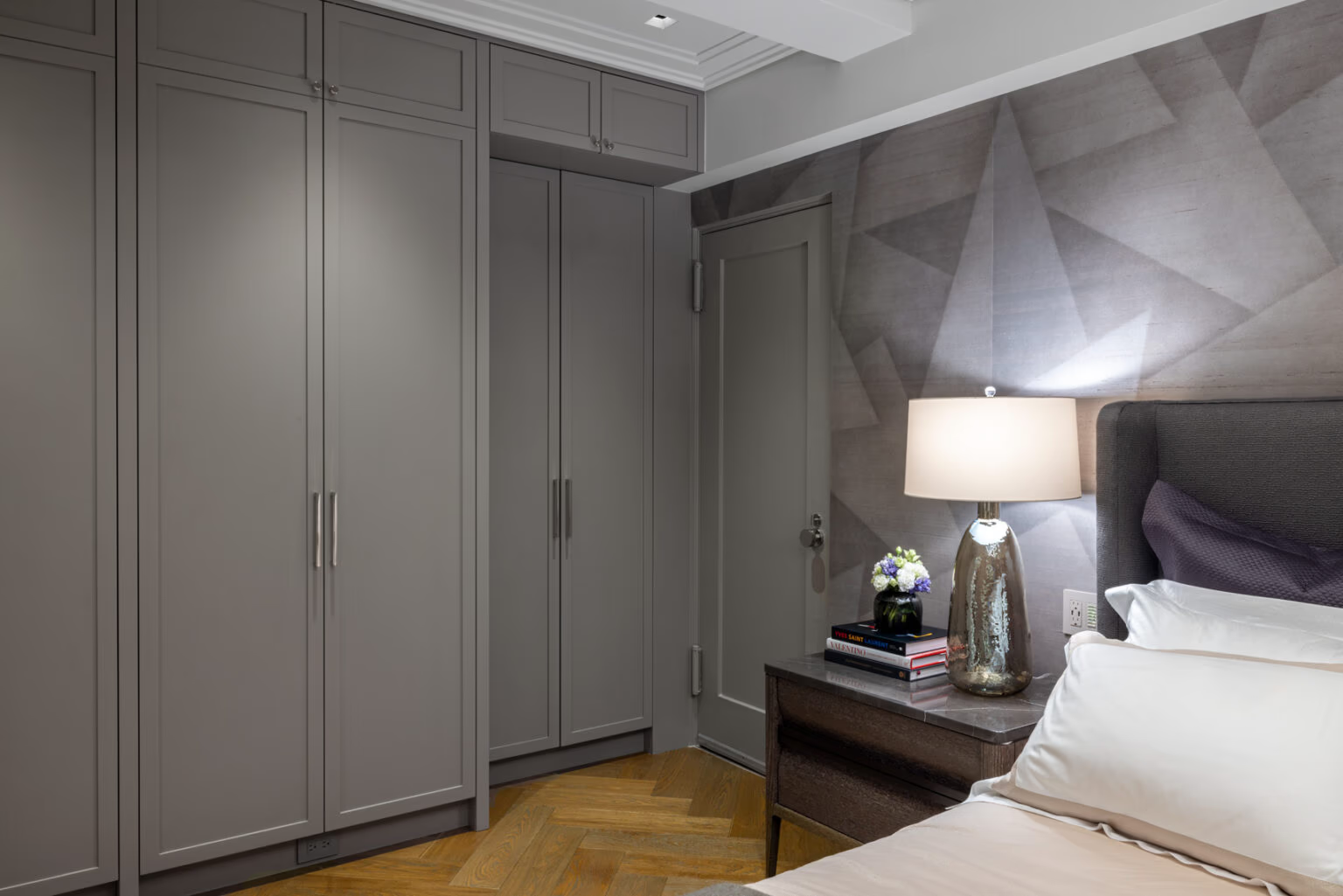
<li><strong>Semi-Custom Cabinetry:</strong> Fabricated on production lines utilizing standardized core carcases but offering customizable modifications, including depth reductions, specialty finish stains, hand-glazed coatings, and catalog interior inserts (lazy susans, pull-out larders). However, vertical ceiling heights and horizontal wall widths remain bounded by standard modular envelopes.</li>
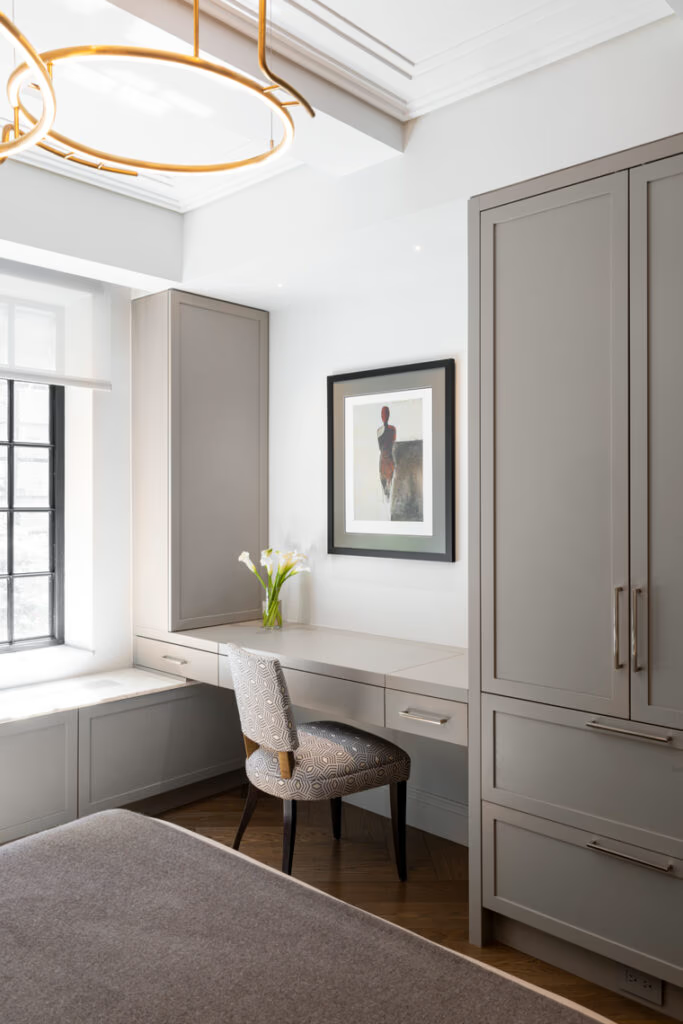
<li><strong>Bespoke Architectural Millwork:</strong> Completely custom casework fabricated from scratch to match unique architectural shop drawings. Every box, stile, rail, fluted pilaster, and integrated reveal is tailored specifically to the residence's room geometry, structural columns, and ceiling transitions using premium materials.</li>
</ul>
<p class="wp-block-paragraph">In luxury <a href="https://ksrenovationgroup.com/kitchen-reno/">luxury custom kitchen renovation</a>, bespoke millwork transforms the kitchen from a collection of assembled modular boxes into an integrated architectural installation.</p>
<h2 id="tolerances-and-prewar-realities" class="wp-block-heading">The NYC Reality: Defeating Out-of-Plumb Walls Without Fillers</h2>
<p class="wp-block-paragraph">New York City residential architecture—ranging from 1910 Upper West Side pre-war cooperatives to 19th-century Greenwich Village brownstones—presents extreme structural anomalies. Over decades of settlement, subfloors slope by 1.5 to 2 inches across a 15-foot expanse, load-bearing masonry walls lean out-of-plumb by half an inch, and ceilings exhibit subtle undulating cambers.</p>
<p class="wp-block-paragraph">When installing semi-custom modular cabinets in these challenging environments, installers must compensate using wide decorative filler strips, shoe moldings, and heavy top-scribed soffits. In a luxury context, seeing a 3-inch dead filler strip placed between a cabinet end and a wall immediately signals modular compromise. Bespoke architectural millwork eliminates this aesthetic flaw by building extended stiles and integrated scribes directly into the face frames, allowing master carpenters to back-bevel casework on-site for hairline 1/16-inch reveals that appear seamlessly carved into the architectural plaster.</p>
<h2 id="material-grades-and-awi-standards" class="wp-block-heading">Materiality and Construction: Plywood Cores, Solid Hardwoods & Veneers</h2>
<p class="wp-block-paragraph">The durability and tactile luxury of cabinetry depend on core box substrates, joinery integrity, and finish chemistry. Premium architectural fabrication adheres to Architectural Woodwork Institute (AWI) standards:</p>
<ul class="wp-block-list">
<li><strong>Box Substrates:</strong> While stock and lower-tier semi-custom cabinets rely on standard 1/2-inch particleboard or MDF that expands and degrades when exposed to moisture leaks, bespoke millwork utilizes 3/4-inch multi-ply Europly or FSC-certified Baltic birch plywood cores featuring waterproof phenolic adhesives and solid hardwood edge-banding.</li>
<li><strong>Joinery Discipline:</strong> Custom drawer boxes feature 5/8-inch solid maple or walnut sides joined with blind dovetail or traditional half-lap dovetail joints, complemented by 3/8-inch fully captured bottoms capable of supporting over 100 pounds of heavy cast-iron cookware.</li>
<li><strong>Architectural Veneers & Finishes:</strong> Custom fabricators source sequential flitch wood veneers (such as quarter-sawn white oak, figured walnut, or exotic ebony) book-matched across continuous cabinet elevations. Finishes are applied in hermetically sealed spray booths utilizing conversion varnish or catalyzed polyurethane lacquers that resist UV yellowing, household chemicals, and humidity fluctuations.</li>
</ul>
<h2 id="integrated-appliances-and-hardware" class="wp-block-heading">Seamless Appliance Integration & Concealed German Hardware</h2>
<p class="wp-block-paragraph">Luxury kitchens demand the seamless integration of chef-caliber refrigeration, wine preservation columns, and dishwashers from heritage brands like Sub-Zero, Gaggenau, and Miele. Standard semi-custom panels frequently suffer from misalignment, uneven gaps, or perimeter reveal discrepancies caused by fixed door offsets.</p>
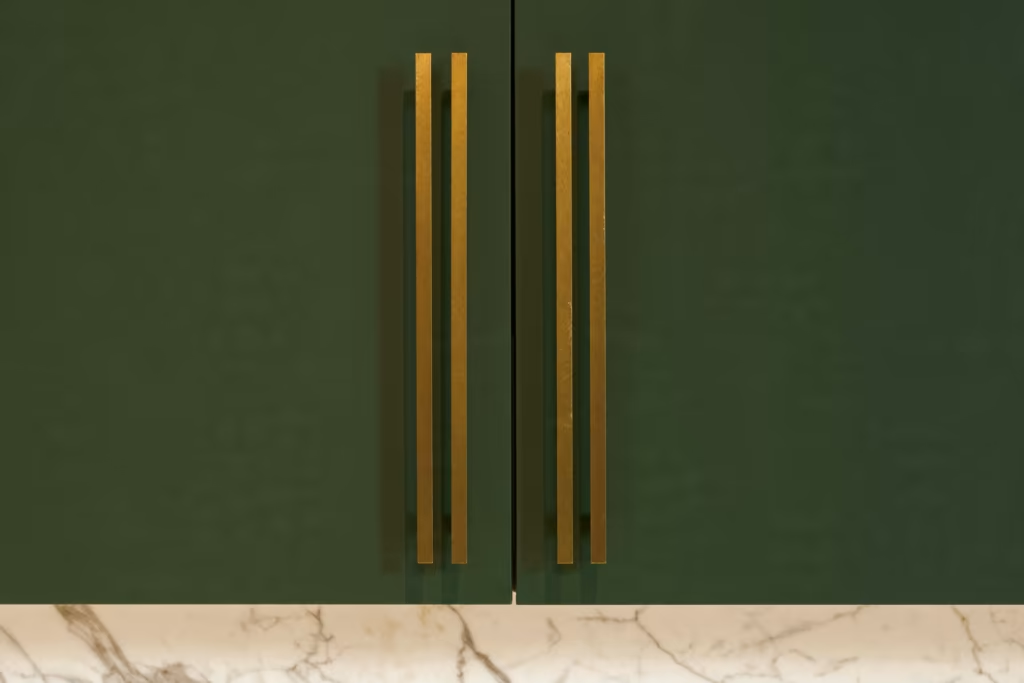
<p class="wp-block-paragraph">Bespoke architectural millwork fabricators engineer appliance panels with precision structural backing, integrated metal stiffeners to prevent wood warping over refrigerator warming coils, and continuous shadow lines that mirror adjacent pantry drawers. Combined with heavy-duty concealed hinges (such as Blum CLIP top BLUMOTION or Grass Tiomos) rated for 200,000 cycles and soft-close under-mount runners, custom millwork delivers silent, effortless tactile feedback.</p>
<h2 id="comparative-roi-analysis" class="wp-block-heading">Cost Breakdown, Lead Times & Appraisal ROI</h2>
<div class="wp-block-table">
<table style="width:100%;border-collapse:collapse;margin:25px 0;">
<thead>
<tr style="background:#2d3748;color:#ffffff;text-align:left;">
<th style="padding:12px;border:1px solid #4a5568;">Cabinetry Category</th>
<th style="padding:12px;border:1px solid #4a5568;">Cost Per Linear Foot</th>
<th style="padding:12px;border:1px solid #4a5568;">Typical Lead Time</th>
<th style="padding:12px;border:1px solid #4a5568;">NYC Resale Value & Appraisal Impact</th>
</tr>
</thead>
<tbody>
<tr style="background:#f7fafc;">
<td style="padding:12px;border:1px solid #cbd5e0;font-weight:600;">Semi-Custom High-End</td>
<td style="padding:12px;border:1px solid #cbd5e0;">$600 – $1,200</td>
<td style="padding:12px;border:1px solid #cbd5e0;">8 – 14 Weeks</td>
<td style="padding:12px;border:1px solid #cbd5e0;">Appeals to mid-market buyers; visible filler strips may be discounted in luxury co-op sales.</td>
</tr>
<tr>
<td style="padding:12px;border:1px solid #cbd5e0;font-weight:600;">Bespoke Architectural Millwork</td>
<td style="padding:12px;border:1px solid #cbd5e0;">$1,500 – $3,500+</td>
<td style="padding:12px;border:1px solid #cbd5e0;">12 – 20 Weeks</td>
<td style="padding:12px;border:1px solid #cbd5e0;">Commands premier price-per-square-foot; recognized as an architectural asset in Manhattan/Brooklyn luxury markets.</td>
</tr>
</tbody>
</table>
</div>
<p class="wp-block-paragraph">While custom architectural millwork commands an initial 40% to 70% cost premium over semi-custom cabinets, its long-term return on investment is proven in three distinct dimensions: durability exceeding 30 years without sagging or delamination, complete utilization of odd spaces that would otherwise become dead voids, and superior market appeal when selling a luxury property. To explore custom casework options for your residence, you can <a href="https://ksrenovationgroup.com/contact/">schedule a renovation consultation</a> with our master millwork team.</p>
<h2 id="frequently-asked-questions" class="wp-block-heading">Frequently Asked Questions</h2>
<div class="faq-accordion" style="margin-top:25px;margin-bottom:35px;">
<script type="application/ld+json">
{
"@context": "https://schema.org",
"@type": "FAQPage",
"mainEntity": [
{
"@type": "Question",
"name": "What is the primary technical difference between bespoke custom millwork and semi-custom cabinetry?",
"acceptedAnswer": {
"@type": "Answer",
"text": "Semi-custom cabinetry relies on standardized factory box dimensions (typically modular increments of 3 inches) with customizable door styles, drawer fronts, and finish stains. In contrast, bespoke architectural millwork is built entirely to the millimeter based on site-verified laser scans of the residence. Millwork accommodates out-of-plumb pre-war plaster walls, irregular floor slopes, structural ceiling beams, and bespoke panel reveals without utilizing awkward fillers or generic scribe molding."
}
},
{
"@type": "Question",
"name": "How does custom architectural millwork impact property resale value in Manhattan and Brooklyn?",
"acceptedAnswer": {
"@type": "Answer",
"text": "In premier Manhattan cooperatives and luxury Brooklyn brownstones, prospective buyers expect floor-to-ceiling architectural integration. High-end custom millwork—such as rift-sawn white oak wall paneling, integrated concealed appliance cladding, and bespoke walk-in dressing suites—creates a tangible differentiator that directly drives higher price-per-square-foot appraisals and shortens days on market compared to homes featuring modular stock or semi-custom casework."
}
},
{
"@type": "Question",
"name": "What are AWI Architectural Woodwork Standards and why do they matter?",
"acceptedAnswer": {
"@type": "Answer",
"text": "The Architectural Woodwork Institute (AWI) establishes strict national quality grades: Economy, Custom, and Premium. Premium Grade represents the pinnacle of craftsmanship, requiring exacting tolerances for veneer grain-matching (book-matched, slip-matched, or balance-matched), hairline 1/16-inch reveal tolerances, solid hardwood dovetail drawer boxes, and ultra-durable multi-stage conversion varnish or hand-rubbed polyester lacquer finishes."
}
},
{
"@type": "Question",
"name": "Can semi-custom cabinets achieve seamless integrated appliance panels?",
"acceptedAnswer": {
"@type": "Answer",
"text": "While some high-end semi-custom lines offer appliance panels, they are frequently constrained by fixed manufacturer dimensions and edge profiles that leave visible reveals or require wide perimeter clearance gaps around Sub-Zero, Miele, or Gaggenau units. True custom millwork crafts continuous, uninterrupted panel faces with concealed zero-clearance hinges and integrated flush pulls, perfectly aligning appliance facades with adjacent storage cabinetry."
}
}
]
}
</script>
<div class="faq-item" style="border-bottom:1px solid #e2e8f0;padding:16px 0;">
<h3 class="faq-question" style="margin:0 0 8px;font-size:18px;font-weight:600;color:#2d3748;">What is the primary technical difference between bespoke custom millwork and semi-custom cabinetry?</h3>
<div class="faq-answer" style="color:#4a5568;line-height:1.6;font-size:15px;"><p>Semi-custom cabinetry relies on standardized factory box dimensions (typically modular increments of 3 inches) with customizable door styles, drawer fronts, and finish stains. In contrast, bespoke architectural millwork is built entirely to the millimeter based on site-verified laser scans of the residence. Millwork accommodates out-of-plumb pre-war plaster walls, irregular floor slopes, structural ceiling beams, and bespoke panel reveals without utilizing awkward fillers or generic scribe molding.</p></div>
</div>
<div class="faq-item" style="border-bottom:1px solid #e2e8f0;padding:16px 0;">
<h3 class="faq-question" style="margin:0 0 8px;font-size:18px;font-weight:600;color:#2d3748;">How does custom architectural millwork impact property resale value in Manhattan and Brooklyn?</h3>
<div class="faq-answer" style="color:#4a5568;line-height:1.6;font-size:15px;"><p>In premier Manhattan cooperatives and luxury Brooklyn brownstones, prospective buyers expect floor-to-ceiling architectural integration. High-end custom millwork—such as rift-sawn white oak wall paneling, integrated concealed appliance cladding, and bespoke walk-in dressing suites—creates a tangible differentiator that directly drives higher price-per-square-foot appraisals and shortens days on market compared to homes featuring modular stock or semi-custom casework.</p></div>
</div>
<div class="faq-item" style="border-bottom:1px solid #e2e8f0;padding:16px 0;">
<h3 class="faq-question" style="margin:0 0 8px;font-size:18px;font-weight:600;color:#2d3748;">What are AWI Architectural Woodwork Standards and why do they matter?</h3>
<div class="faq-answer" style="color:#4a5568;line-height:1.6;font-size:15px;"><p>The Architectural Woodwork Institute (AWI) establishes strict national quality grades: Economy, Custom, and Premium. Premium Grade represents the pinnacle of craftsmanship, requiring exacting tolerances for veneer grain-matching (book-matched, slip-matched, or balance-matched), hairline 1/16-inch reveal tolerances, solid hardwood dovetail drawer boxes, and ultra-durable multi-stage conversion varnish or hand-rubbed polyester lacquer finishes.</p></div>
</div>
<div class="faq-item" style="border-bottom:1px solid #e2e8f0;padding:16px 0;">
<h3 class="faq-question" style="margin:0 0 8px;font-size:18px;font-weight:600;color:#2d3748;">Can semi-custom cabinets achieve seamless integrated appliance panels?</h3>
<div class="faq-answer" style="color:#4a5568;line-height:1.6;font-size:15px;"><p>While some high-end semi-custom lines offer appliance panels, they are frequently constrained by fixed manufacturer dimensions and edge profiles that leave visible reveals or require wide perimeter clearance gaps around Sub-Zero, Miele, or Gaggenau units. True custom millwork crafts continuous, uninterrupted panel faces with concealed zero-clearance hinges and integrated flush pulls, perfectly aligning appliance facades with adjacent storage cabinetry.</p></div>
</div>
</div>